

Evidence Discipline
Recording Your Ex in Queensland: What Is Legal, What Is Admissible
In Queensland you can secretly record a conversation you are part of. That is the easy part. The hard part is what the Federal Circuit and Family Court of Australia does with it, and how often a recording ends up as evidence against the man who made it.
Legally reviewed by Tracey McMillan · 3 September 2026
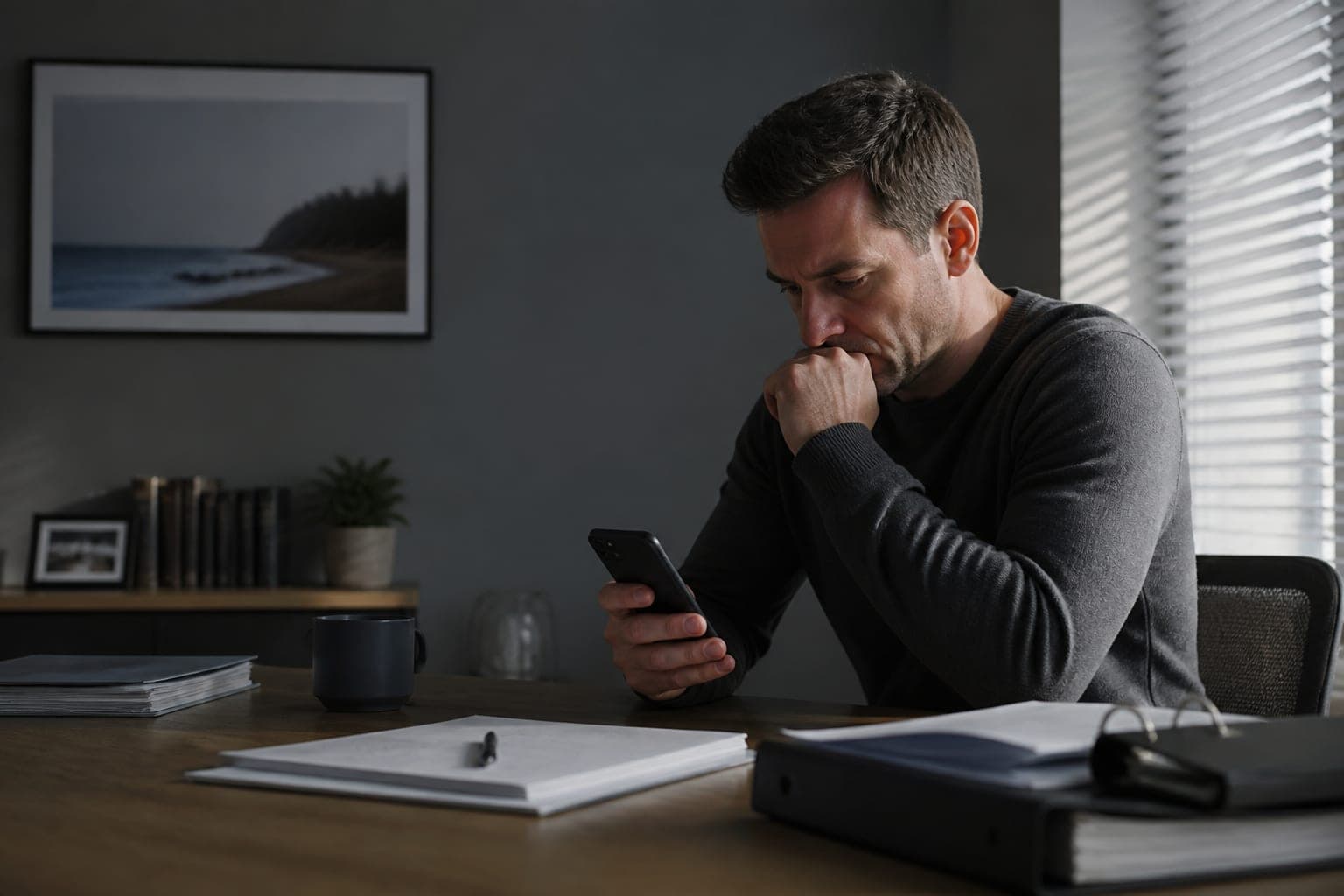
In Queensland you can lawfully record a private conversation you are part of, without telling her. Recording a conversation you are not part of is a criminal offence. And legal does not mean the Federal Circuit and Family Court of Australia (FCFCOA) will let it in, or that it will help you. Sometimes it torches your case.
The Queensland rule, in plain English
The law that governs audio recording here is the Invasion of Privacy Act 1971 (Qld).
If you are an active participant in a private conversation, face to face or on the phone, you can record it. You do not need her consent. You do not need to warn her. That is what people mean when they say Queensland is a "one party consent" state.
If you are not a participant, it is a different world. Leaving a phone recording in the lounge room while she talks to her sister. A device in the car. A listening app on someone else's handset. That is using a listening device on a conversation you are not part of, and it is a criminal offence carrying up to two years' imprisonment.
So the line is not "secret or not secret". The line is "in the room or not in the room".
Translation: if you are in the conversation, you can press record. If you are not, pressing record can put you in the dock instead of the witness box.
Making it legally is not the same as sharing it legally
This is the part almost nobody knows, and it catches good men every week.
Even where you lawfully recorded a conversation as a participant, the Act restricts publishing or distributing it to other people without consent. Sections 44 and 45 are the ones that bite. Sending it to her mother. Playing it to the netball team. Posting a clip. Dropping it in a group chat to prove you are the reasonable one.
There is an exception, and it is the exception that matters to you: sharing in the course of legal proceedings, or to protect your lawful interests. Your lawyer. Police. The court.
The stakes are simple. One lawful recording plus one unlawful distribution equals you standing there explaining yourself, while the actual content of the tape becomes the least interesting thing in the room.
Translation: the recording goes to your lawyer, not to the internet.
Video is not the same as audio
Men assume filming is the safer option. Sometimes it is. The listening device rules are about conversations and sound. Filming is governed differently, which is exactly why you should not assume the same rules carry across.
A phone on the dash at a public car park handover, running quietly, capturing what happens: courts have accepted footage like that where the parent filming had a genuine safety reason and could explain it honestly. Filming inside a home, into a bedroom, or in a way that intimidates, is a completely different proposition, and other laws (stalking, and the terms of any protection order) can land on you fast.
There is a second layer in Queensland now. Since 26 May 2025 there has been a standalone criminal offence of coercive control: a pattern of behaviour intended to control or coerce a current or former partner or family member. Repeated monitoring, tracking and recording is exactly the kind of conduct that gets described that way, whatever your reason for doing it. A judge deciding a parenting case reads it the same way.
And if there is a domestic violence order in place naming you, read the conditions before you film anything. Conduct that looks like monitoring or harassment can put you in breach even where you thought you were gathering evidence. Get advice on where the order actually leaves you before you press record.
Translation: film the handover, not her life.
The phone call trap
Here is the kicker: state law is not the only law in play on phone calls.
Commonwealth law, the Telecommunications (Interception and Access) Act 1979 (Cth), prohibits intercepting a communication while it is passing over a telecommunications network. Putting the call on speaker and recording the room with a separate device is generally outside that. Line taps and device-level interception software sit in a genuinely murky area that can amount to a federal offence.
If you are thinking about installing something clever, stop and ask a lawyer, not a forum. Software on someone else's phone is the single fastest way to turn yourself from the person complaining into the person being investigated.
Translation: speaker phone and a second recorder is housekeeping. Spyware is a federal problem with your name on it.
Legal does not mean admissible
In child-related proceedings, many of the strict rules of evidence are relaxed under the Family Law Act. Men hear that and assume anything goes.
It does not. Section 138 of the Evidence Act 1995 (Cth) still applies, and it hands the court a discretion to exclude evidence that was obtained illegally or improperly. The judge weighs how valuable the evidence is against how undesirable it was to get it that way. How serious the impropriety was. Whether it was deliberate or reckless. Whether you could reasonably have proved the same thing lawfully.
The FCFCOA has admitted secret recordings where the person recording had a real and pressing interest, safety at handover, or proving a pattern of abuse that no one else witnessed. Courts have also excluded recordings where a parent taped the other parent talking to the children, because the recorder was not part of that conversation and the children's trust was used as a tool.
Translation: the court is not asking "was this legal in Queensland". It is asking "should I reward the way this was obtained".
How recordings turn on the man who made them
The pattern we see most is not illegality. It is baiting.
You press record. You ask the question designed to set her off. You stay flat and calm because you know the tape is running, and you keep going until she snaps. Then you hand over four minutes of her at her worst and none of the twenty before it.
Judges read that in about ninety seconds. And once a court forms the view that you engineered the moment, every other thing you say gets discounted. The recording stops being evidence about her and becomes evidence about you.
The other version is volume. Six hundred files. Forty hours of audio. No transcripts, no index, no point. That does not read as diligence, it reads as obsession, and obsession is the exact allegation you are trying to disprove in a parenting matter.
And understand this: if you have made a recording, it does not stay in your pocket. It will be put in front of the judge, you will be cross examined about it, and it can affect both the parenting orders and the property settlement. Do not take it lightly.
Translation: your fight-or-flight wiring, the croc brain every human runs on, thinks a tape of her losing it is a trump card. The judge thinks it is a personality test. Yours.
When a recording genuinely earns its place
There are real cases for it.
Safety at handover, where something has already happened and you need a neutral record of what occurs at the kerb. Threats. A pattern of controlling or financially abusive conduct that leaves no other trace. Since June 2025, family violence, including economic and financial abuse, is written into how the court approaches property settlement, so evidence of that conduct can matter to the money as well as the kids.
The test is not "could this help me". The test is "is there a specific fact I need to prove, and is this the only reasonable way to prove it".
One recording that proves one thing beats forty hours that prove you cannot let go.
The discipline that actually wins
Here is what we tell the men we work with to do instead of building an archive.
Keep communication in writing, on one channel, in a tone you would be happy to have read aloud. Write a short dated note the same day something happens: time, place, who was there, what was said. Boring and contemporaneous beats dramatic and edited. Keep any recording you have made intact, original, unedited, and give it to your lawyer with a one-paragraph explanation of why it exists.
Then stop recording and go be the calm parent. Steady. Anchored. Predictable.
If money is the reason you are trying to build the case yourself, that is a fixable problem. Ask about paying at the end rather than turning your phone into a substitute lawyer.
Translation: the paper trail you can hand over in five minutes beats the one you need three hours to explain.
If safety is the real issue
If you are recording because you are frightened, or because you are being threatened or controlled, the recording is not the plan. Support is.
1800RESPECT (1800 737 732) runs 24/7 nationally. In Queensland, DVConnect Mensline is 1800 600 636 and Womensline is 1800 811 811. The Leaving Violence Program provides financial support and safety planning for eligible victim-survivors. Legal Aid Queensland is 1300 65 11 88 and runs duty lawyer services at court.
Family violence is about power and control, not gender, and men experience it too. Ring someone before you press record.
FAQ
Is it legal to record phone calls in QLD without telling her?
If you are a participant in the private conversation, yes. Queensland is a one party consent state, so you can record a call or a face to face conversation you are part of without her consent. That is state law about making the recording. It says nothing about whether the FCFCOA will admit it.
Can I record a handover on my dashcam or phone?
Often yes, particularly in a public place where you have a genuine safety reason. Check the conditions of any protection order first, keep the footage to the handover itself, and do not narrate it for the camera.
Can I send the recording to her family or post it online?
No. Even a lawfully made recording is generally restricted from being published or distributed without consent. The exception is using it in legal proceedings or to protect your lawful interests, which means it goes to your lawyer.
Will the court actually listen to my recordings?
Sometimes. The court has a discretion under section 138 of the Evidence Act 1995 (Cth) to exclude evidence obtained illegally or improperly, weighing its value against how it was obtained. Assume you will be cross examined about why you made it.
Can she record me without permission?
Yes, on the same terms. One party consent cuts both ways. Assume every call and every handover conversation you have may be recorded, and speak accordingly.
Should I record the kids telling me what happens at her house?
No. Courts take a dim view of children being used to gather evidence, and recordings like that are frequently excluded and frequently damaging to the parent who made them. Raise the concern with your lawyer instead.
Can recording her count as coercive control?
It can. Queensland's coercive control offence, in force since 26 May 2025, targets a pattern of controlling behaviour, and repeated monitoring, tracking or recording of a former partner can form part of that picture. One recording made for a clear safety reason is a different animal to a surveillance habit.
The one-line rule
Before you press record, answer this out loud: what single fact am I proving, and would I be comfortable being cross examined about why I did this? If you cannot answer both, put the phone down and get advice on the parenting or property play instead.
Primary sources
Consulted in researching this guide:
- Queensland Governmentoic.qld.gov.au
- Queensland Legislationlegislation.qld.gov.au
- Parliament of Australiaaph.gov.au
- Queensland Governmentqld.gov.au
- Australian Governmentministers.pmc.gov.au
- Australian Governmentdss.gov.au
- Queensland Governmentlegalaid.qld.gov.au
More from Tracey: watch & listen →
Read next
Litigation Funding in Australian Family Law: How Pay at the End Works
Most men do not stall because they lack guts. They stall because they cannot see how the bill gets paid. Here is how litigation funding actually works in Australian family law, what it really costs, and what you can do to shrink the bill yourself.
Continue →Right now is hard. If you're not okay:
24/7 · Free, confidential support · Immediate danger, call 000
Subscribe
Field notes by email.
New tactical pieces from inside the family courts, written for the men in the middle of it. One email when there's something worth your time.
Privacy: Queensland Law Practice Pty Ltd (trading as Forge) collects your email only to send these field notes. We don't share it. Unsubscribe anytime. Full privacy policy.